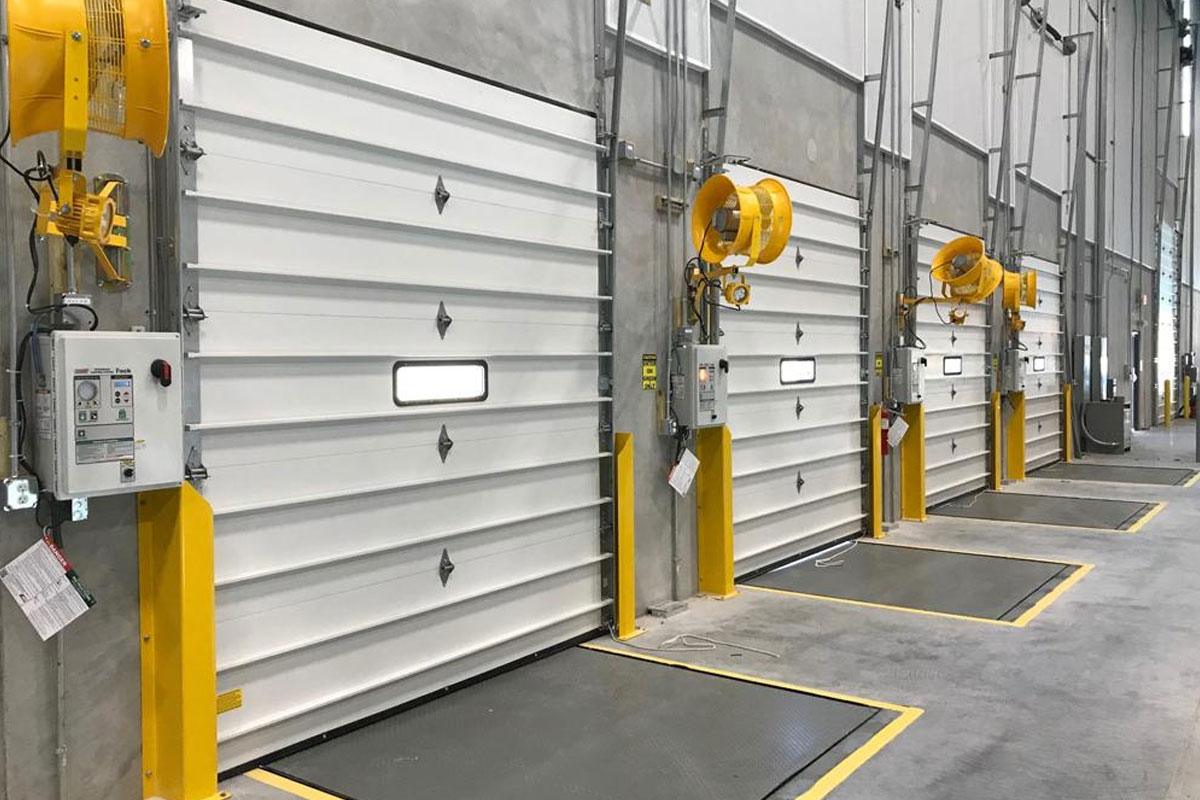
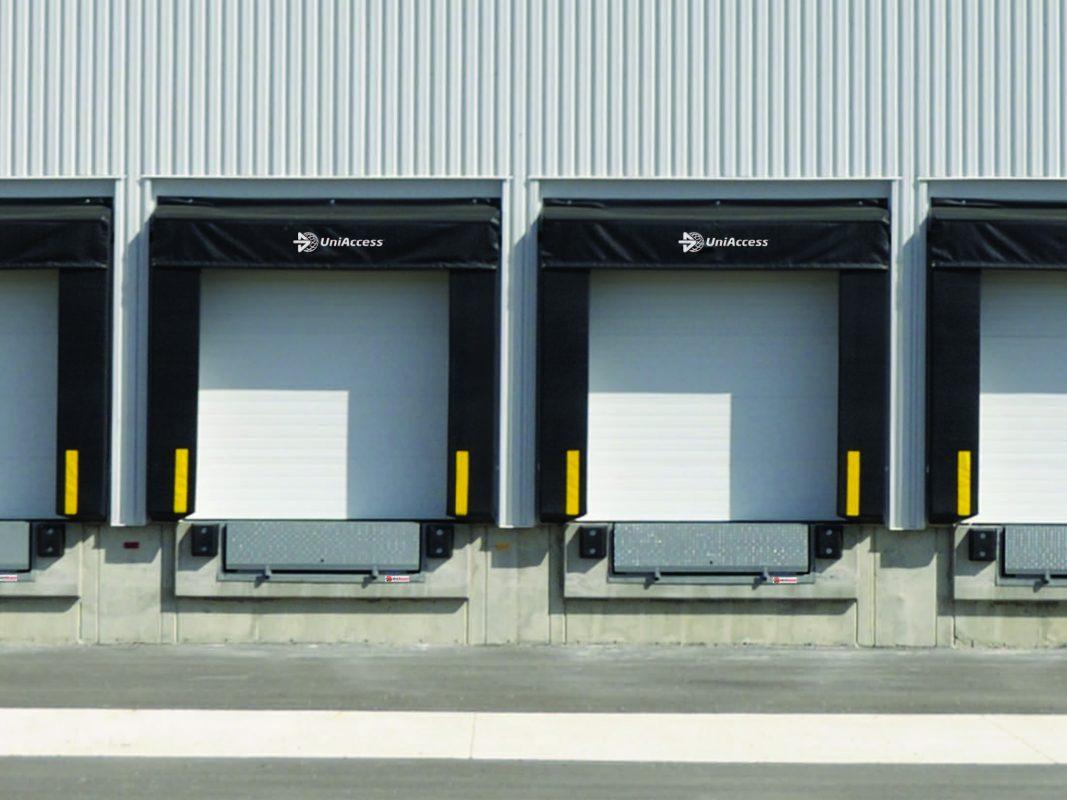
Every warehouse, distribution center, and manufacturing facility relies on its loading dock more than most people realize. It’s the point where products enter and exit, where trailers connect to the building, and where efficiency either holds together or breaks down. Two products make that connection work the way it should: dock seals and dock shelters.
Dock seals are foam-based components mounted around the dock opening that compress against a trailer as it backs in, closing the gap between the building and the vehicle. Dock shelters work on a similar principle but use a frame-and-curtain or pad system that flexes to accommodate different trailer sizes and heights. Both exist for the same core reason: keeping the elements, pests, dust, and temperature loss out of the building while a trailer is loading or unloading. Without dock seals and dock shelters in place, that opening becomes a direct channel for outside air, debris, and energy loss every single time a truck pulls up.
At Ideal Seal Manufacturing, the focus stays specifically on dock seals and dock shelters, along with related equipment like loading dock bumpers and engineered solutions for facilities with unusual dock configurations. The company offers compression dock seals for standard applications, along with rigid frame and impactable dock shelters for facilities that need more flexibility around trailer variation or higher traffic volume. This focused approach means each product is built around real loading dock conditions rather than offered as a generic, one-size-fits-all add-on.
The case for dock seals and dock shelters becomes clearest in facilities handling temperature-sensitive goods. Refrigerated and frozen warehouses lose significant energy through an unsealed dock opening, and that loss adds up quickly across dozens of daily loading cycles. A properly fitted dock shelter or compression seal keeps conditioned air inside the building and outside air where it belongs, protecting both product integrity and energy costs.
Worker safety is another reason dock seals and dock shelters matter beyond simple efficiency. Loading docks are high-traffic, high-risk zones, with forklifts, pallets, and trailers moving constantly. A solid seal or shelter reduces drafts, ice buildup, and slippery conditions caused by weather intrusion, while also creating a more controlled, predictable space for workers moving in and out of trailers.
Ideal Seal Manufacturing was founded specifically to solve a problem its parent companies kept running into: long lead times on dock seals and dock shelters that left customers waiting months for equipment that should have arrived in weeks. That history shapes how the company operates today, with an emphasis on getting reliable dock seals and dock shelters into customers’ hands without the extended delays common elsewhere in the industry.
For any facility manager evaluating their loading dock setup, the right combination of dock seals and dock shelters isn’t a minor detail. It directly affects energy costs, product protection, and worker safety every single day. Reviewing spec sheets, comparing seal types to shelter types, and matching equipment to actual trailer traffic patterns is the first step toward a loading dock that performs the way it should, year-round.